There is nothing further you need to do right now for this class action. If the case settles or the class action is certified, eligible class members will be notified by a court-appointed case administrator.
Did you purchase Starbucks coffee products? Starbucks may have misled consumers about its ethical sourcing practices and concealed that certain volatile organic compounds (VOCs) are present in Starbucks decaffeinated coffee beans.
WHAT’S THE ISSUE?
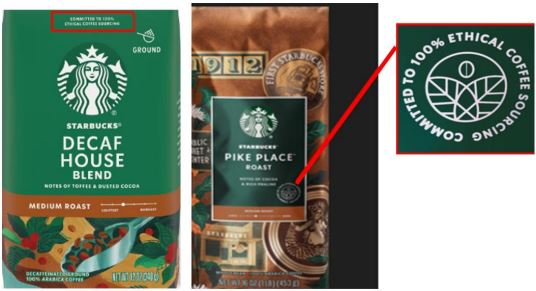
Consumers represented by members of the Hagens Berman consumer protection team filed a class-action lawsuit against Starbucks accusing it of misleading consumers about alleged human rights violations in its supply chain and of the existence of certain VOCs (volatile organic compounds) in its decaf coffee.
STARBUCKS’ ALLEGED MISREPRESENTATIONS
According to the lawsuit, Starbucks makes deceptive claims on its website, product packaging and public-facing reports:
HUMAN RIGHTS CLAIMS
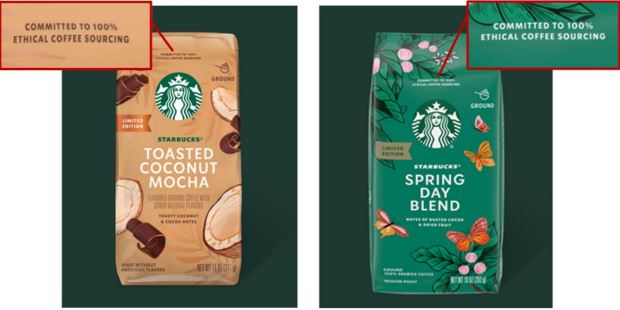
Despite packages of Starbucks coffee stating Starbucks is “Committed to 100% Ethical Coffee Sourcing” extensive investigations by journalists, labor organizations, and human-rights monitors have documented that farms certified under Starbucks’ C.A.F.E. [Coffee And Farmer Equity] Practices program have repeatedly engaged in egregious labor abuses and degrading working conditions, and violations of local labor laws.”
The complaint alleges that C.A.F.E. Practices-certified farms “have been found to engage in extensive human rights violations including forcing workers to work in dangerous conditions without protective gear, forcing workers to live in utterly unacceptable conditions, and myriad other offenses that violate local labor laws.” The complaint provides several examples of farms with egregious labor law violations but had nevertheless maintained its C.A.F.E. certification. And when Starbucks was notified, over and over again, of the labor law and human rights abuses on its farms, Starbucks refused to disclose what steps were being taken to remediate them.
TOXIC SUBSTANCES IN DECAF COFFEE
Independent testing of Starbucks’ decaf house blend medium roast coffee detected the presence of VOCs methylene chloride, benzene and toluene.
Testing detected methylene chloride at 22 parts per billion, a chemical the EPA deems unsafe for consumption at any level. Benzene was detected at 28 parts per billion, 23 parts per billion higher than what the EPA determines to be a safe amount. Toluene was detected at 87 parts per billion, which according to the lawsuit, “is not authorized for use as a food ingredient or processing aid and is commonly associated with industrial solvents, packaging materials, and manufacturing processes rather than ingestible products.”
The lawsuit alleges that Starbucks’ claims of their coffee consisting of only “100% Arabica coffee” are misleading consumers who may actually be exposed to unexpected chemicals.
YOUR CONSUMER RIGHTS
Hagens Berman believes consumers have a right to honest information about the products they buy. The firm’s seasoned consumer-protection attorneys are investigating the rights of consumers for Starbucks’ alleged misrepresentations.
CONSUMER & ENVIRONMENTAL LAW FIRM
Hagens Berman is a nationally recognized consumer rights and environmental law firm and has achieved total settlements valued at more than $345 billion in litigation on behalf of plaintiffs. Hagens Berman has achieved record-breaking settlements in consumer-protection lawsuits, and your claim will be handled by attorneys experienced in this area of law. The firm also specifically and expertly takes on complex litigation like this, upholding the rights of consumers and our precious ecosystem under the law.